Turkish parliament committee approves Makkah Agreement on joint defence with Pakistan, Saudi Arabia
Updated 35 minutes ago

Foreign ministry spox Esmaeil Baghaei says regional security talks must address US aggression, Israeli expansionism
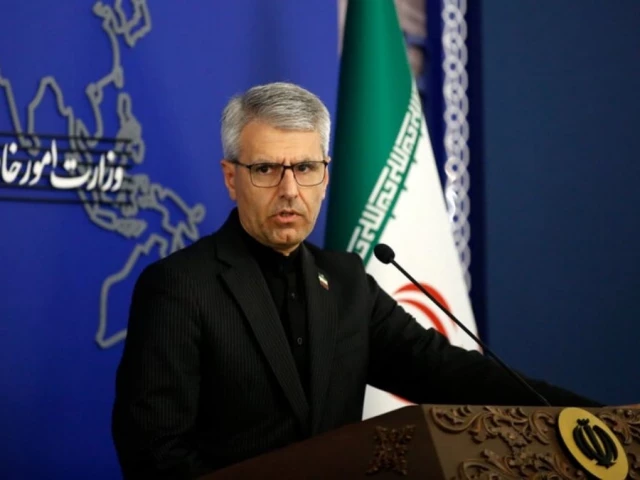
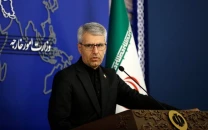
Iran accused the US on Monday of lacking seriousness in negotiations, saying Washington has repeatedly confused diplomacy with imposing demands on Tehran.
“The American side is not serious about negotiations,” Foreign Ministry spokesman Esmaeil Baghaei said during his weekly news conference, as cited by the state-run IRNA news agency.
He accused Washington of repeatedly making false claims, recalling that US President Donald Trump had expressed support for negotiations shortly before the US military attacks on Iran in June 2025.
“What do you call this? Do you see any goodwill in this approach?” he asked.
Baghaei said Tehran had not received any new European proposal for negotiations beyond a political statement, criticising Britain, France and Germany for their positions during the conflict.
He accused the three countries of following Washington’s lead on the restoration of UN sanctions and failing to condemn military attacks against Iran.
No nuclear weapons
Baghaei reiterated that Iran had never possessed nuclear weapons or sought to acquire them, accusing Washington of using allegations about Tehran’s nuclear programme to justify military action.
He said Iran had negotiated in good faith and signed the 2015 nuclear agreement, but the US withdrew from it three years later.
The spokesman accused the US administration of being influenced by Israeli claims about Iran’s nuclear programme, describing allegations that Tehran was developing a nuclear bomb as a justification for military aggression.
Missing Iranian pilots
Baghaei said Iran continued to hold Qatar responsible for clarifying the fate of three Iranian pilots whose aircraft were hit in the Gulf country.
“Until we have evidence of their deaths or receive precise information and documentation, we assume that the country where their aircraft were hit must be held accountable,” he said.
He added that Tehran was pursuing the matter in coordination with its military leadership and through technical delegations and legal discussions.
Baghaei also confirmed that a Qatari delegation recently visited Tehran, saying the trip involved bilateral cooperation and regional mediation efforts.
He described such visits as normal during regional conflicts, noting that Qatar had sought to convey messages and present its positions.
Commenting on Israel’s upcoming elections and threats of military action against Iran, Baqaei accused Israeli politicians of competing over who could commit more crimes.
“It makes no difference to us who takes charge of a regime with a history of violence and killings,” he said.
Russia visit
The spokesman confirmed that President Masoud Pezeshkian would travel to Russia on Monday night to attend a summit of gas-exporting countries.
He said the visit would provide opportunities to strengthen energy cooperation with Moscow and hold consultations with other major energy-producing countries.
Baghaei also addressed border-related difficulties with Pakistan and Iraq, saying discussions with Islamabad were progressing positively.
He said Pakistan had described the issue as technical while also raising security concerns, including reports of planned attacks.
Regarding Iraq, he said Iranian diplomatic missions were pursuing the matter, warning that US pressure on Baghdad could harm the Iraqi population and bilateral relations.
Baghaei said Iran summoned the Italian ambassador on Sunday to express concern over the authorities’ handling of protests in European countries.
He accused France, Belgium and Italy of using excessive force and restricting the right to protest, saying such measures were inconsistent with their human rights obligations.
The French ambassador had also been summoned previously, he added.
Saudi Arabia and Yemen
On the conflict involving Saudi Arabia and Yemen, Baqaei said regional security was interconnected and instability in one country could affect others.
He stressed that the dispute should be resolved between Saudi Arabia and Yemen, reiterating Tehran’s readiness to help facilitate a settlement.
“Military approaches make problems more complicated and cause extensive damage,” he said, expressing hope that Saudi Arabia would pursue a negotiated solution.
Tensions between Washington and Tehran have persisted since the US and Israel launched military attacks on Iran on February 28, triggering a regional conflict and disrupting shipping through the Strait of Hormuz.
On June 18, Trump and Pezeshkian signed a Pakistan-mediated memorandum of understanding, aimed at ending hostilities, reopening the strategic waterway and paving the way for a broader agreement.
However, disagreements over the implementation of the understanding, including the US naval blockade, sanctions and navigation through the strait, have continued to hinder diplomatic efforts.
Earlier this month, Iran said restoring security to the Strait of Hormuz remained central to negotiations with Washington, insisting that the US must take specific steps to resolve the standoff.
Baghaei also said the meeting between Pakistan, Saudi Arabia, Turkiye, and Iran would tackle the US war on Iran as well as Israel's "expansionist policies" and turmoil in Lebanon, according to Press TV.
In a press briefing, he said that the CDF "had proposed holding a four-country meeting." “Iran agreed to the four-country meeting following Field Marshal Asim Munir’s proposal,” Baghaei said.
Baghaei said that the meeting between Saudi Arabia, Turkiye, Iran and Pakistan would mark the first talks between Iran and the three Makkah Pact countries since they signed the agreement in August, according to IRNA.
“Naturally, the meeting is expected to address the most important issues affecting regional security, including the Zionist regime’s expansionism, developments in the occupied Palestinian territories, and the areas surrounding Lebanon. Such a meeting cannot take place without considering the implications of the US military aggression against Iran for security across the region. This, too, is an important issue that should be addressed in this context,” he said.
Baqaei: Tehran meeting to focus on endogenous securityhttps://t.co/g6GwogtXd6 pic.twitter.com/J5iv1Eqn5g
— IRNA News Agency ☫ (@IrnaEnglish) October 26, 2026
He said the meeting could pave the way for further steps toward establishing a regional security framework based on the interests and priorities of regional countries, according to IRNA.
“This meeting could pave the way for further steps toward establishing an indigenous security framework, a goal we have consistently advocated for decades, stressing that regional security can only be ensured by relying on the will and security considerations of the countries in the region themselves,” he said.
No European proposal received on negotiations
The spokesperson said Tehran had received no specific proposal from European officials while responding to a question about Iran’s readiness to negotiate with European countries that have called for diplomacy, according to IRNA.
“We have not received any proposal, except for the political statement they issued. Regarding the importance of negotiations, we have not yet received any specific proposal from European officials either,” he said.
Asked whether European countries had placed greater emphasis on diplomacy, Baghaei said, “I am not sure we can call it a change in approach. It could be a political gesture.”
He pointed to European countries' refusal to explicitly condemn the US-Israeli aggression against Iran.
“Instead, they took a stance implying support for the aggression or at least appeasement and inaction toward it. This behaviour is not acceptable at all,” Baghaei said, expressing hope that European countries would assess developments in West Asia more realistically.
Opportunity for gas exporters to consult in Pezeshkian's Russia visit
Baghaei said that Iranian President Masoud Pezeshkian’s visit to Russia to attend the Gas Exporting Countries Forum (GECF) summit on Tuesday would be an opportunity for energy suppliers, particularly gas exporters, to hold talks and consultations.
The visit would also be important as it would include President Pezeshkian’s bilateral meetings with his counterparts attending the summit, according to IRNA.
Winner of Israeli elections unimportant for Iran
Regarding Israeli officials’ claims ahead of Knesset elections that Iran might launch a preemptive military strike to disrupt the vote, Baghaei said that it made no difference to Iran who led the Israeli regime, as the elections were merely a competition among different groups to commit greater atrocities.
“I do not think there are elections there in the true sense of the word. What is actually taking place is a competition among different factions to commit more mischiefs. It is a race among individuals, each trying to prove that they can commit more crimes, aggression and killings than the others.”
“Therefore, it makes no difference to us who ultimately takes the helm of the Israeli regime in this climate and through these elections,” he further said, adding that the regime’s history shows that it has brought nothing to the region but violence and killings.
Baghaei added that the Israeli regime’s frequent threats against others, which he described as stemming from desperation, and its rhetoric were part of its mischief. “The Zionist regime is highly skilled at carrying out false-flag operations.”
Accusations against Iran show desperation
Asked about accusations by the Albanian government that Iran interfered in their country's ongoing protests, Baghaei said the protests stemmed from public opposition to corruption, mismanagement, and the transfer of the country’s land to foreign businesspeople.
“Accusing Iran and Russia of interference under such circumstances implies that the two countries oppose corruption in Albania. If that is the basis for these accusations, then it is a source of credit for us to stand in support of those who oppose corruption,” he said.
“These empty threats and boasts are a sign of desperation. They demonstrate no strength or authority; they only further undermine the credibility of those making them in the eyes of regional public opinion and the Iranian people,” he added.
Baghaei also addressed other issues raised by reporters at his press conference, according to IRNA. He reaffirmed Iran's support for the Lebanese people and said that Iran would spare no effort in strengthening capacities in "various fields in Lebanon", IRNA reported him as saying.
Regarding elections in Serbia, Baghaei said that Iran respected the choice made by the majority of people in any country that held elections.
He said that Iran and Iraq were seriously pursuing these issues, which will "hopefully be resolved soon", as per IRNA. He added that both sides should focus on their nations’ interests, particularly as Iraqi officials themselves have pointed to US pressure, according to IRNA's coverage.
Iran expressed solidarity with the Cuban people in the face of increasing US pressure and its economic blockade. Washington is exerting pressure only because the Cuban people seek independence and want to choose their own system of government.
He also said that Iran summoned the Italian and French ambassadors to Tehran to express its concern over widespread human rights violations during recent protests in several European countries, and criticised institutions which claimed to defend human rights for remaining silent about violations by European governments, according to IRNA.
Additionally, regarding the Brazilian elections, he said that the Brazilian people showed that they do not give in to pressure and choose what is in their country’s interests.
Other issues raised at the press conference included the fate of the Iranian pilots in Qatar, Iran’s nuclear programme and the allegations of Iran pursuing a nuclear weapon, the Iranian Armed Forces’ readiness to defend the country, and the Yemen-Saudi Arabia war.
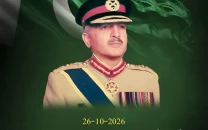
Meanwhile, the Inter-Services Public Relations (ISPR) said on Monday that the Chief of Defence Forces and Chief of Army Staff Field Marshal Asim Munir is visiting Tehran today on an official visit.
Field Marshal Syed Asim Munir, NI (M), HJ, Chief of the Army Staff & Chief of Defence Forces (COAS & CDF) is visiting Tehran, Iran for an official visit.
— DG ISPR (@OfficialDGISPR) October 26, 2026
Iran's Supreme National Security Council Deputy Secretary Ali Bagheri announced that the CDF Munir and senior officials from Saudi Arabia and Turkiye would travel to Tehran as part of efforts to implement the idea of "endogenous security" in West Asia, according to IRNA.
In an interview carried by ISNA, he is reported to have said that Saudi Arabia's Defence Minister Khalid bin Salman, CDF Munir, and Turkish Intelligence Chief Ibrahim Kalin will "attend a joint meeting during their trip to Tehran".
Ali Bagheri, Deputy Secretary of the Supreme National Security Council, announced that senior officials from Saudi Arabia, Pakistan, and Turkey will travel to Tehran as part of efforts to implement the idea of endogenous security in West Asia. pic.twitter.com/XU0ByEdsJv
— IRNA News Agency ☫ (@IrnaEnglish) October 26, 2026
"Asim Munir had previously announced their meeting with the Secretary of Iran's Supreme National Security Council during his encounter with Lieutenant General Mohsen Rezaei."
باقری: خالد بن سلمان وزیر دفاع عربستان، عاصم منیر فرمانده ارتش پاکستان و ابراهیم کالین رئیس دستگاه اطلاعاتی ترکیه در سفر به تهران در نشستی مشترک حضور خواهند داشت؛ عاصم منیر در دیدار با سرلشکر محسن رضایی از دیدار آنها با دبیر شورای عالی امنیت ملی خبر داده بود pic.twitter.com/HtOblyE5ta
— خبرگزاری ایسنا (@isna_farsi) October 26, 2026
Israel’s Netanyahu clashes with army chief over Iran-linked operation ahead of election
Israeli Prime Minister Benjamin Netanyahu and Army Chief of Staff Eyal Zamir clashed over a proposed military operation that could trigger fighting with Iran ahead of Israel’s election, Channel 12 reported on Sunday.
Zamir requested a detailed discussion and signed legal authorisation from political leaders before carrying out their instructions, the broadcaster said. It did not disclose the nature of the operation.
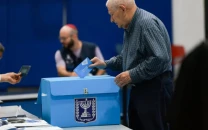
The report cited military concerns that the political leadership could exploit tensions with Iran for electoral gain before the October 27 parliamentary vote.
A security official warned that the operation could rapidly escalate into a confrontation with Iran and lead to a miscalculation at a particularly sensitive time.
Netanyahu denied any dispute with Zamir during an interview with Israel’s Channel 14 later Sunday. “There is no confrontation,” he said.
Also Read: Trump rules out Sunday military strikes on Iran
Political officials also rejected the claim that the Iranian issue was being used for electoral purposes, according to Channel 12.
In the same interview, Netanyahu said he had instructed the Mossad intelligence agency and the military to work toward toppling Iran’s government.
Channel 12 did not establish whether the undisclosed operation was connected to those instructions.
Netanyahu also claimed Iran had resumed its nuclear programme and portrayed the election as a matter of Israel’s survival.
Earlier on Sunday, he posted an AI-generated image of a nuclear explosion over Tel Aviv alongside a warning about Iran obtaining nuclear weapons. Opposition party leaders Gadi Eisenkot and Yair Golan accused him of spreading fear and panic before the vote.
Trump reiterates his endorsement of Netanyahu, urges Israel to ‘finish the job’ in Iran
US President Donald Trump on Sunday reaffirmed his strong support for Israeli Prime Minister Benjamin Netanyahu, urging Israelis to re-elect him in the upcoming election and calling for Israel to press ahead with its military campaign against Iran until it is completed.
In a post on his Truth Social platform, he referred to an endorsement letter he published on October 18, praising Netanyahu as an “outstanding Warrior Prime Minister” and emphasising their close relationship in military operations against Iran.
“As everyone is aware, including the enemy, Bibi and I have had a great relationship in winning together,” Trump wrote, citing the US military operation against Iran, dubbed Operation Epic Fury, as an example.
Trump claimed that Iran had lost its navy and air force and that its military and economy were in disarray. He also said Iran's inflation had reached 301% and that a naval blockade had prevented the country from exporting oil. He further claimed that two levels of Iran's leadership, both military and civilian, had been eliminated.
Urging Israeli voters to support Netanyahu, he said: “Vote for Bibi Netanyahu for Prime Minister. We have to finish the job that we started!”
In his October 18 letter to the Israeli public, Trump described Netanyahu as a “Great Warrior Prime Minister” and an “even greater Partner for Peace” in confronting Iran, referring to what he called Iran's decades-long threats against Israel and the US.






This material may not be published, broadcast, rewritten, redistributed or derived from. Unless otherwise stated, all content is copyrighted © 2026 The Express Tribune.




COMMENTS (4)
Comments are moderated and generally will be posted if they are on-topic and not abusive.
For more information, please see our Comments FAQ